

- Final Rule: Technical Changes to Medicare Programs
- IRS: Identifying full-time employees
- IRS: Form 5500 Series | U.S. Department of Labor
- Blog: The Risks of Level-Funded Health Plans
- Blog: What Benefits to Include in the Wrap SPD
- Blog: How Retirement Fiduciaries Can Help Health Plan Fiduciaries
- Blog: PBM Fee Disclosure Regulatory and Legislative Update
- Blog: Sponsors of HRAs and ICHRAs will no longer be required to issue Medicare Part D Notices Eff. 1/1/2027
- Blog: 8 Key HIPAA Compliance Items for Businesses with Self-Insured Health Plans
- Blog: RxDC Reporting Considerations for Employers in 2026
Compliance Deadlines
- June 1, 2026 – File annual RxDC & Healthcare Spending Report via CMS (most plans)
- July 31, 2026 – File Form 5500 via DOL’s eFAST2 portal (plans with 100+ participants at beginning of plan year)
- July 31, 2026 – Pay PCORI fee for using IRS Form 720 (self-insured plans)
2025 Trends in Family Medical Leave Requests
- Granting leave is only the beginning – documenting the leave process through to its end reduces exposure.
- Serious Health Condition is alow bar – train HR & managers to recognize potential FMLA scenarios.
- Tidy up internal policies & procedures – cases turn on an employer’s failure (or fastidiousness) in establishing internal communication about leave.
Fiduciary? Prepare for the PBM Transparency Rule
Plan sponsors are ERISA fiduciaries of their plans; they must be loyal to and practice “prudence” respecting plan management & administration. Goals of the proposed PBM Transparency Rule “Rule” are three-fold:
- Require transparency into PBM pricing for self-insured plans to determine if pricing is “reasonable” under ERISA arrangements between plans & providers;
- Evaluate PBM service agreements; and
- Identify conflicts of interest.
The Rule proposes a dozen disclosures to plan fiduciaries, including direct, manufacturer, and “other” compensation; copay clawbacks; spread pricing; formulary placement incentives; price protection contracts; service descriptions; drug pricing methods; termination clause fees; and statement of fiduciary status & audit right.
The proposed Rule will alter how employer health plans evaluate PBMs. Consider preparing your team for oversight regarding the following:
- Fiduciary Status:Plan fiduciaries will have greater access to data to assess whether PBM compensation is reasonable or present conflicts of interest. Know the plan fiduciaries.
- Contract Negotiations. PBM negotiations regarding rebate pass-through structures, spread pricing arrangements, and audit rights & reporting obligations should be top-of-mind.
- Litigation Risk. Litigation risks may increase if PBM compensation is excessive or inconsistent with fiduciary duties under ERISA.
- Compliance & Business Operations. Employers should review all fiduciary procedures, including formation of a committee, review of plan documents, and creating checklists for compliance. Create a process to regularly monitor vendors to ensure PBM agreements include required disclosures.
Source: Boutwell Fay LLP, 2026
Plan Sponsors: Mental Health Parity is still Required.
- All plans are subject to compliance with the MHPAEA Rules codified in the CAA of 2021 & updated in 2024. Self-insured plans must still conduct a Non-Quantitative Treatment Limit (NQTL) comparative analysis for their plan outlining parity between medical/surgical benefits & mental health/substance issue benefits. Plans must be able to produce it upon request by participants & regulators; therefore, it should be current, annually is recommended. At minimum, plans should reassess if plan design changes, vendors change, or more than 10% of plan demographics change.
- A Self-Compliance Tool is available from the DOL if a third-party audit is cost-prohibitive.
- Employers: if you haven’t yet conducted the assessment do so; document it; and establish a standard to oversee it.
U.S. Health Care Coverage & Spending
Table 1. Health Care Coverage, 2024, Congress.gov
Private Health Insurance Stats:
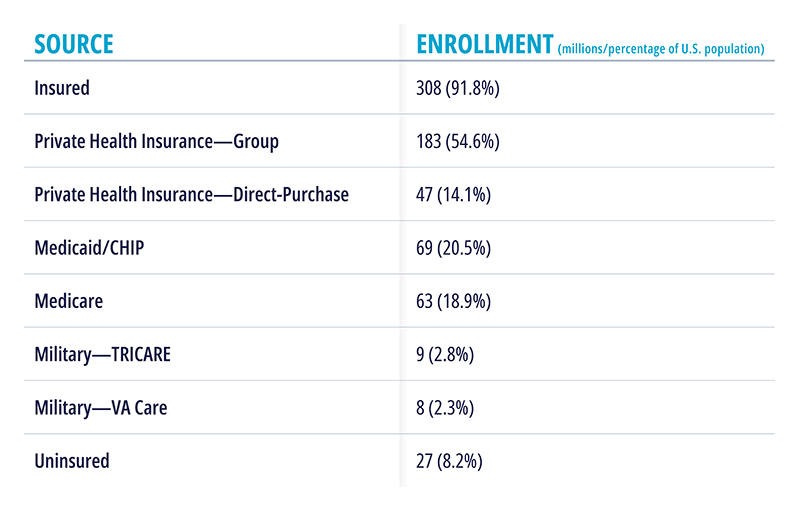
- predominant source of health insurance coverage in the United States
- includes group & direct-purchase coverage
- ~55% of the U.S. population had group coverage
- ~14% of the U.S. population had direct-purchase coverage
- Nearly 33% of overall Health Care Expenditures in 2024 were due to private health insurance
Source: U.S. Census Bureau, Table HIC-4_ACS, "Health Insurance Coverage Status and Type of Coverage by State-All Persons: 2008 to 2024," in American Community Survey, September 2025. Notes: Italicized = does not add to total. Coverage estimates are not mutually exclusive. CHIP = State Children's Health Insurance Program. Medicaid/CHIP coverage estimate includes all means-tested public coverage (e.g., state and locally financed public coverage).
Disclaimer: Content presented is not, nor is it intended to be legal advice; it is for general education purposes. Please consult local legal & tax counsel for specific guidance regarding any one welfare benefits plan. Content is the sole property of Patriot Growth Insurance Services, LLC, and is not to be modified in any way or used for any other purpose. © 2026 Patriot Growth Insurance Services, LLC.